HERITAGE & COLLECTIONS
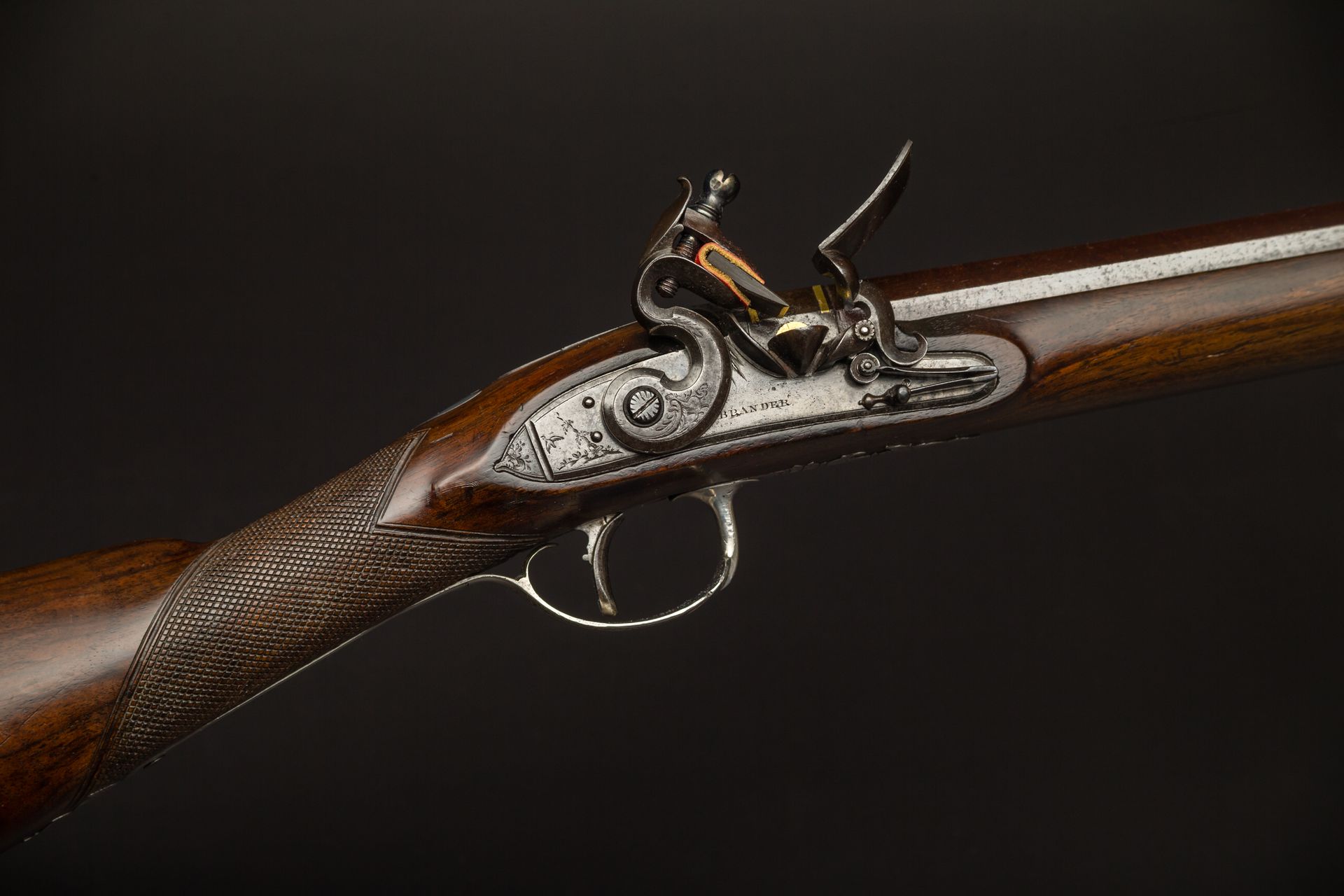
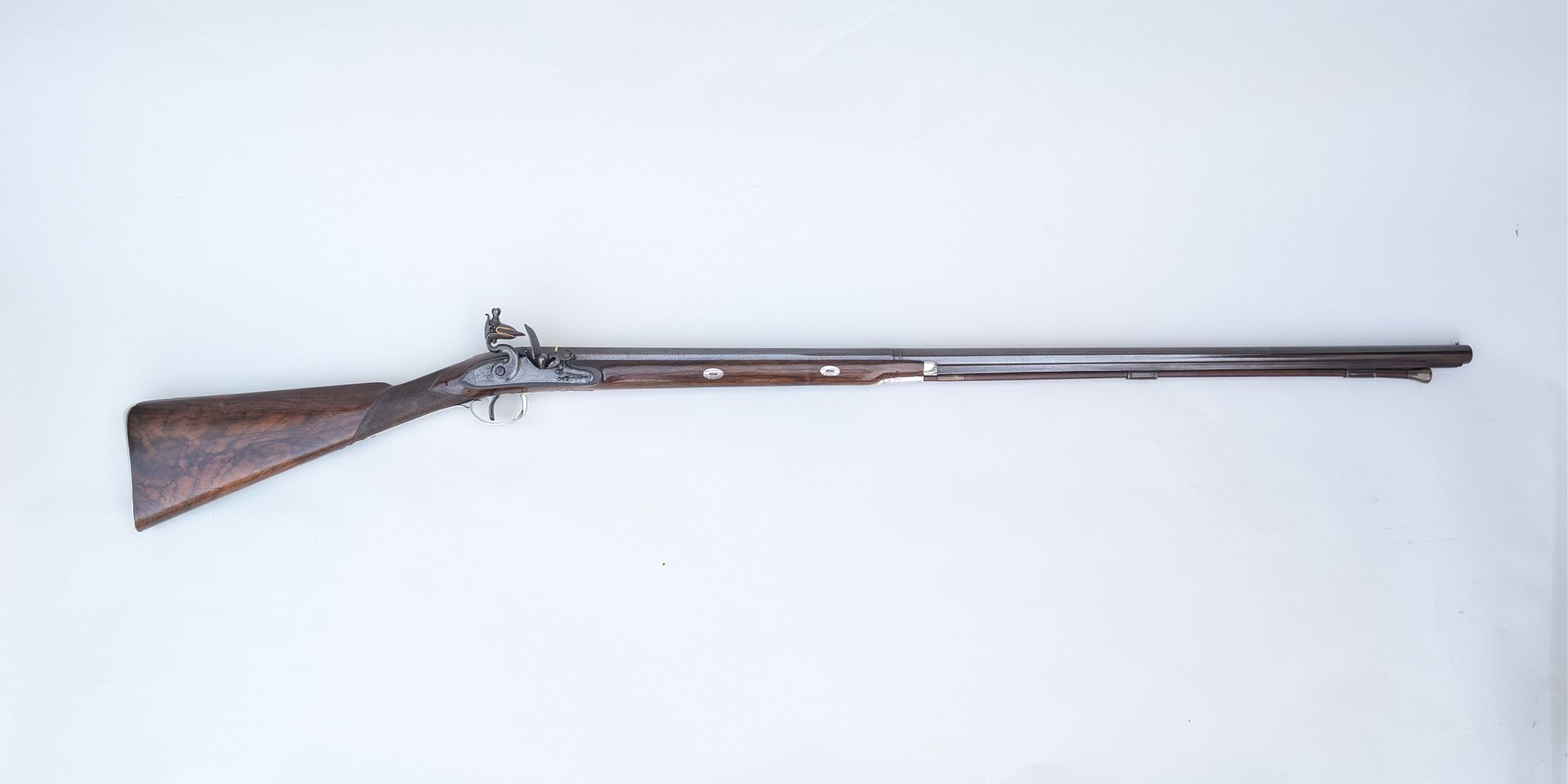
The Brander Sporting Gun
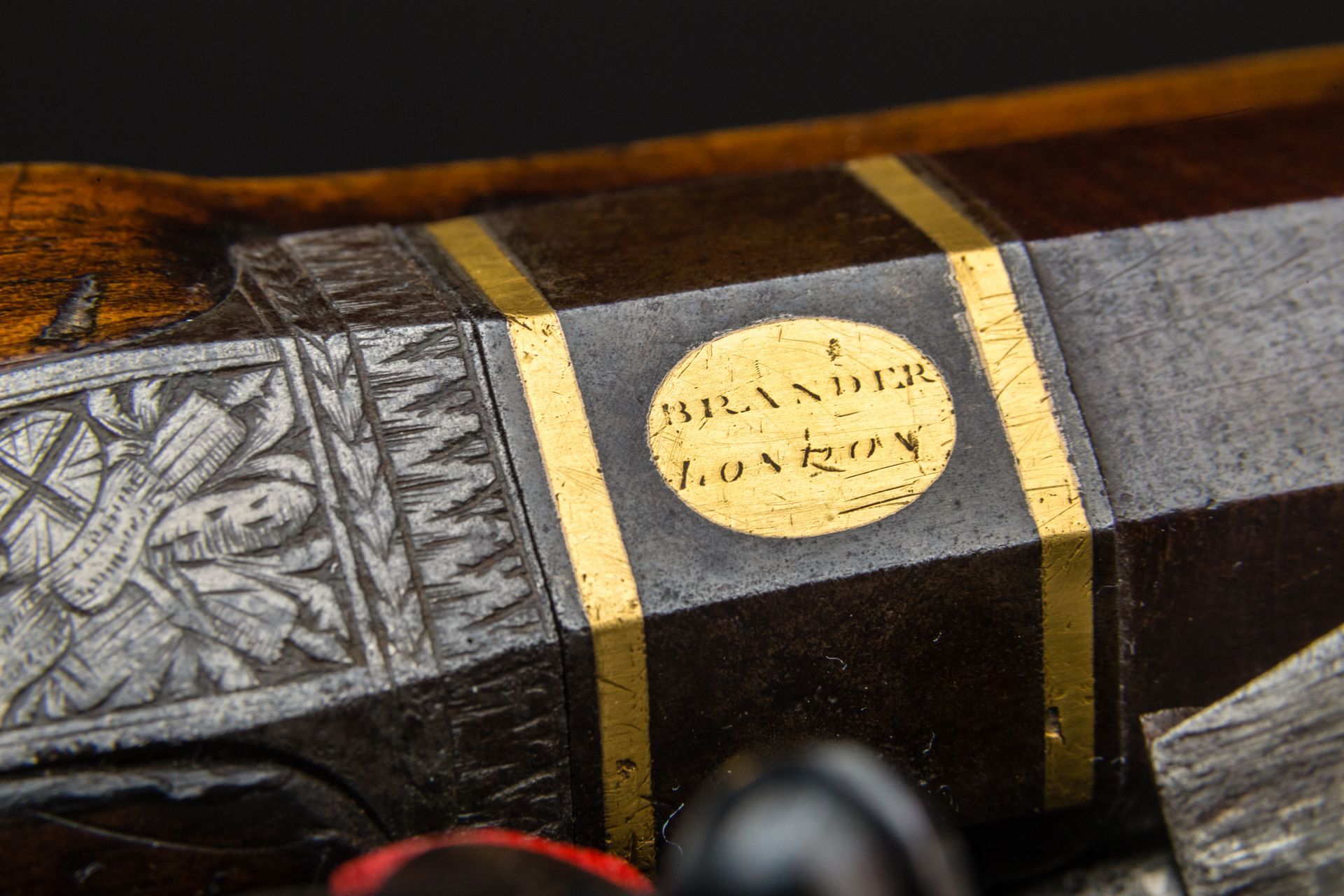
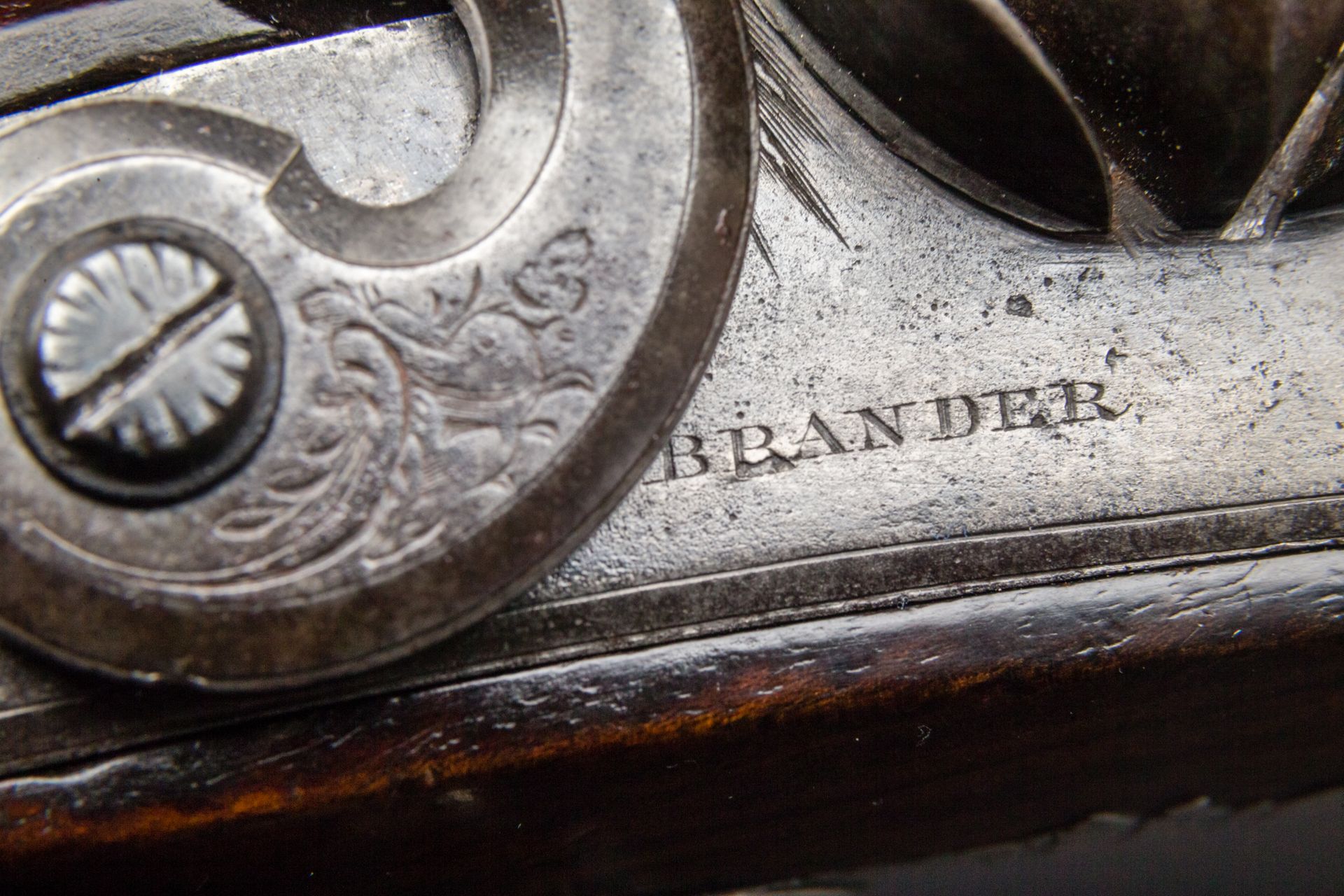
The maker’s name at the breech. Photograph: Mark Hewlett, Gallyon.
A gun made by Masters
When the Gunmakers’ Company set out to place a gun at Guildhall, the aim was to find one that truly represented the London gun trade and the Company. It would be seen by members of our own and other livery companies at the moment they take their Freedom of the City.
The Company looked at a number of candidates, spanning several generations of gunmaking technology, and asked other Liverymen what each one meant to them. The Brander stood out for its originality, its condition and the many stories it tells.
It was made in London in the late 1790s by a Master of the Company, whose father had been Master before him. Its silver was made by a man who would become Master of the Founders’ Company. More than two hundred years later, it was found, valued, bought, given and conserved by members of the Company today.
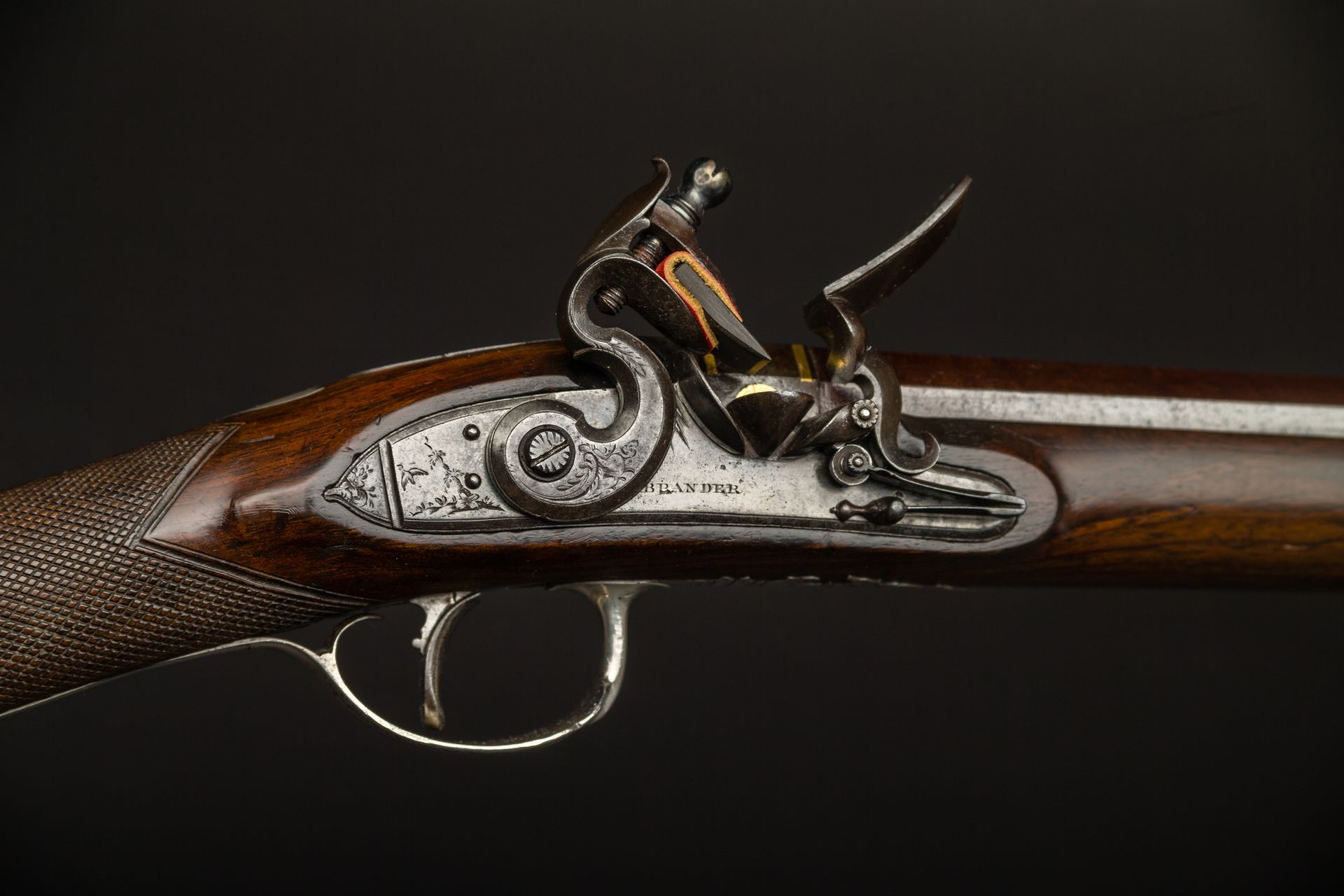
The restored lock and trigger. Photograph: Mark Hewlett, Gallyon.
The gunmakers: William and Martin Brander
The gun was made by Martin Brander (1760–1827), the son of William Brander, in a workshop rooted in the Company for most of the eighteenth century. Between them, father and son served as Master five times.
William Brander learned his trade under Samuel Blanckley before being turned over in 1741 to an earlier William Brander, then working at the Hermitage by the Thames. William gained the Freedom of the Gunmakers’ Company in 1748 and submitted his proof piece and registered his mark in 1752. He was elected to the Court as an Assistant in 1761 and served as Master in 1767, 1772 and 1779.
William’s business stood in the Minories, the street just east of the City wall that was the heart of the London gun trade. By 1765 it was at 70 Minories, and by 1773 it was supplying the East India Company.
Martin was apprenticed to his father in 1774. He took his Freedom in 1781, joined the Livery in 1782 and was elected an Assistant in 1788. In 1781 he also joined the Honourable Artillery Company. By 1782 he had taken over the family business, and he went on to serve as Master in 1792 and again in 1807.
Marked by the Company
Since the Company’s Royal Charter of 1637, guns made in and around London have been tested at the Company’s Proof House before they could be sold. The Brander’s barrel still carries the marks struck when it passed: the crowned V of the view mark and the crowned GP of the proof mark
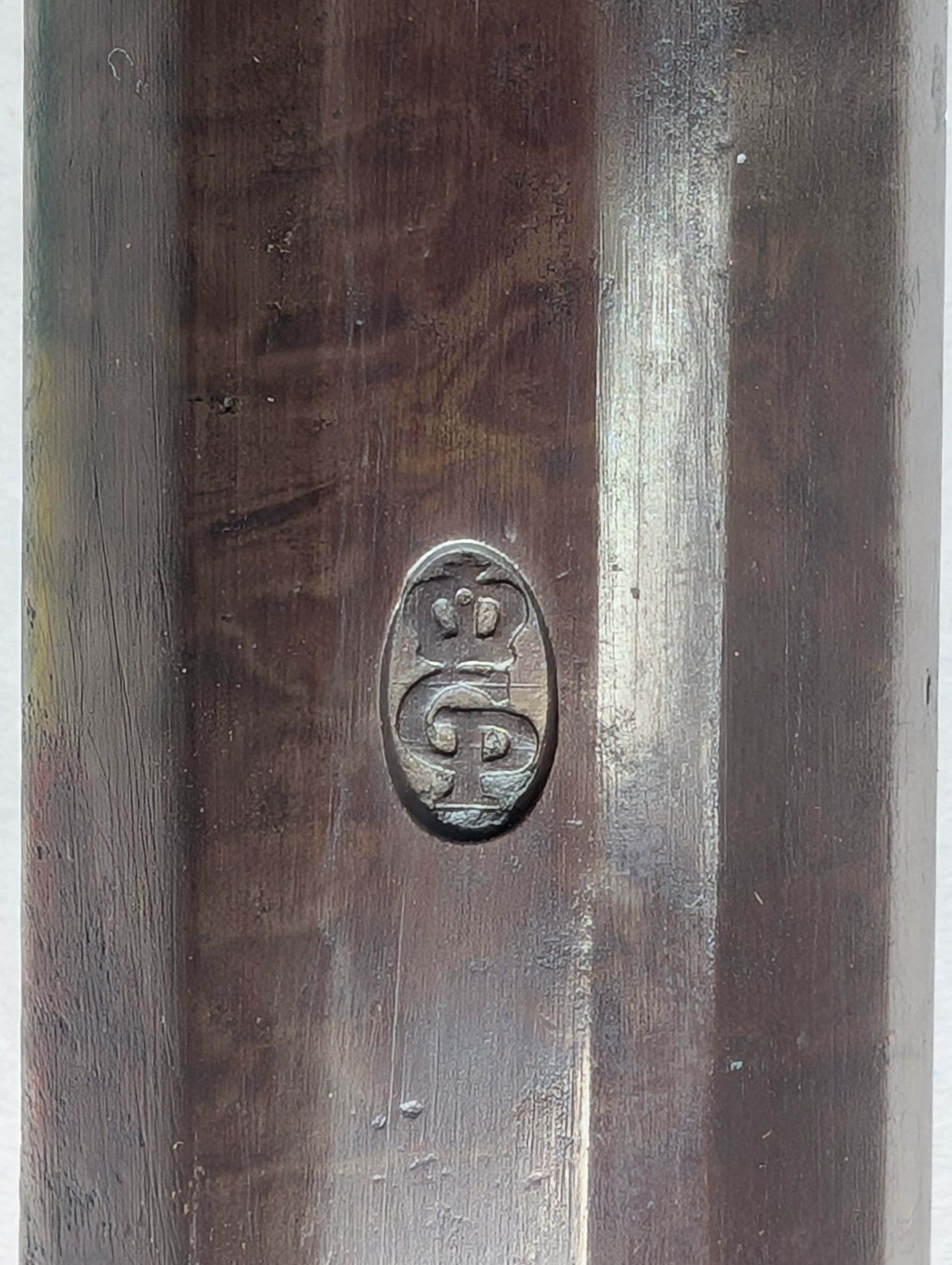
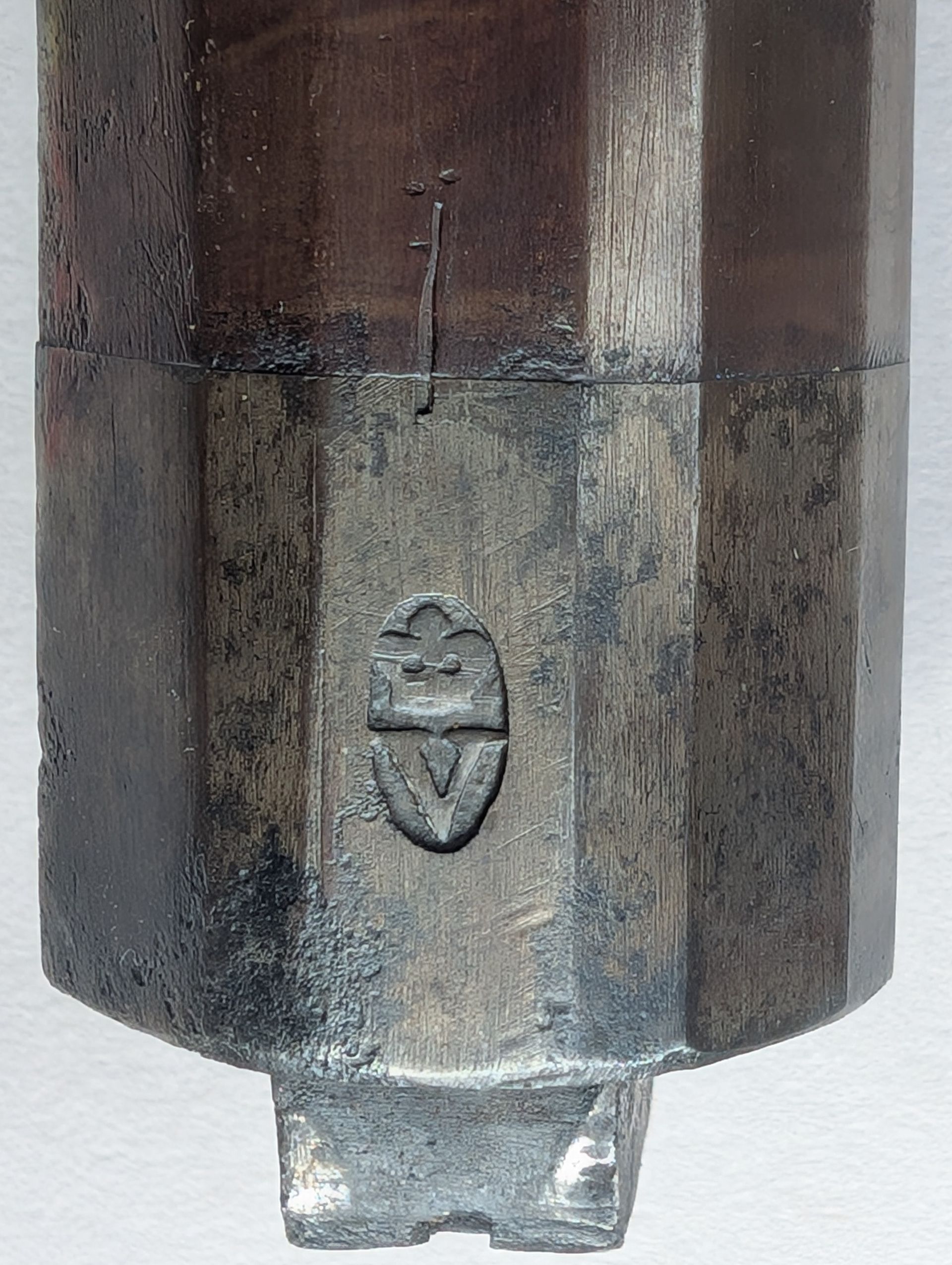
The Crown GP proof mark and Crown V view mark on the Brander gun's barrel.
The word “proof” runs through the Brander story twice. Martin’s barrels were proved by the same Company that, in 1752, had accepted William’s proof piece as evidence of his skill as a gunmaker. Today the Company’s Certification Panel still accredits gunmakers and Master Gunmakers, and the London Proof House still proves guns.
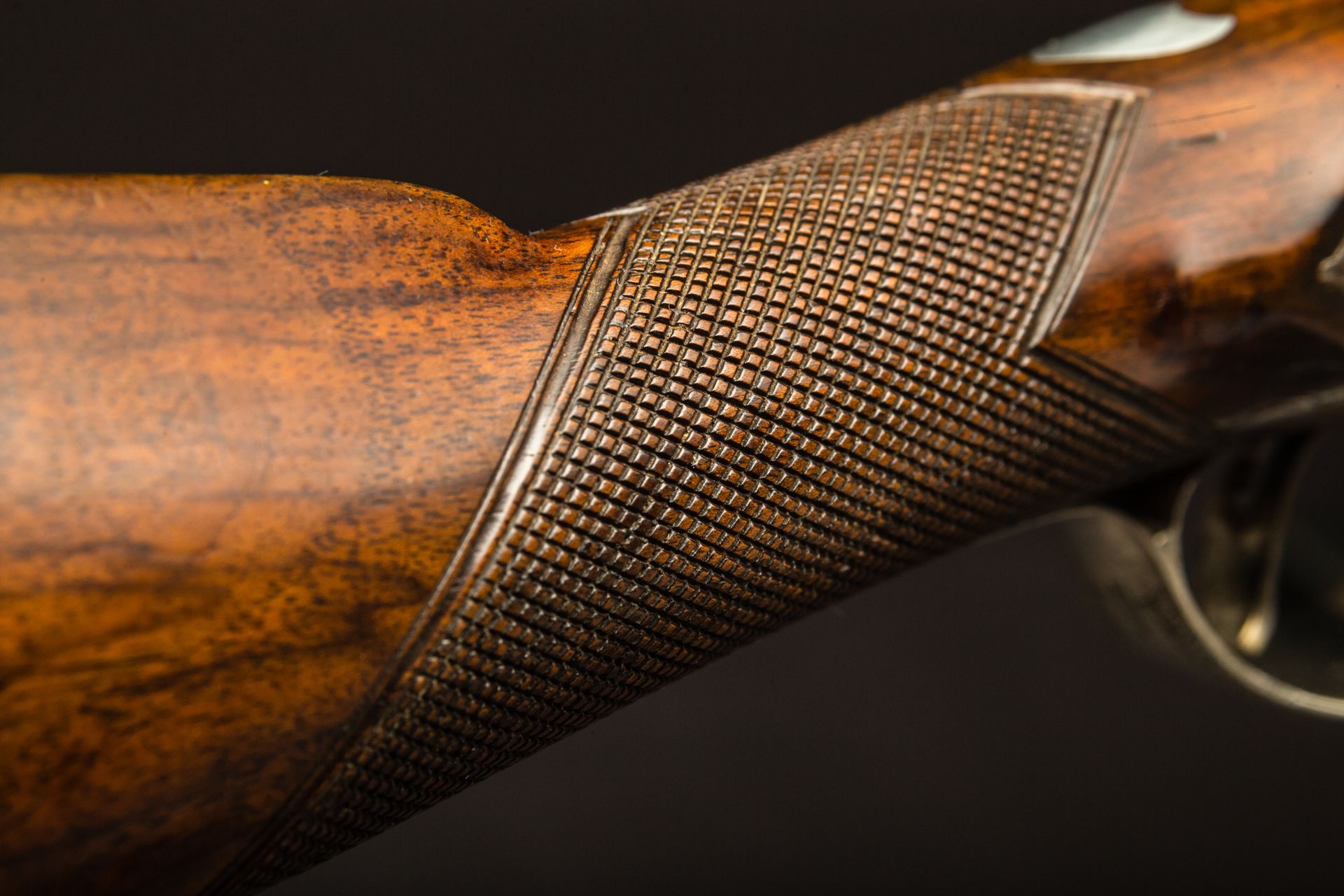
The beautiful chequered grip . Photograph: Mark Hewlett, Gallyon.
The silversmith: Michael Barnett
The gun’s silver furniture was hallmarked at the London Assay Office in 1798 and carries the maker’s mark of Michael Barnett (1758–1823). Born in Workington, Cumberland, Barnett became one of the leading specialist suppliers of silver mounts to the London gun trade.
Gunmakers did not make their own silver. They bought trigger guards, butt caps, ramrod pipes and escutcheons from specialist silversmiths, and Barnett supplied many of the best makers of the day. His mark appears on guns and pistols by makers including H.W. Mortimer, Gunmaker to King George III
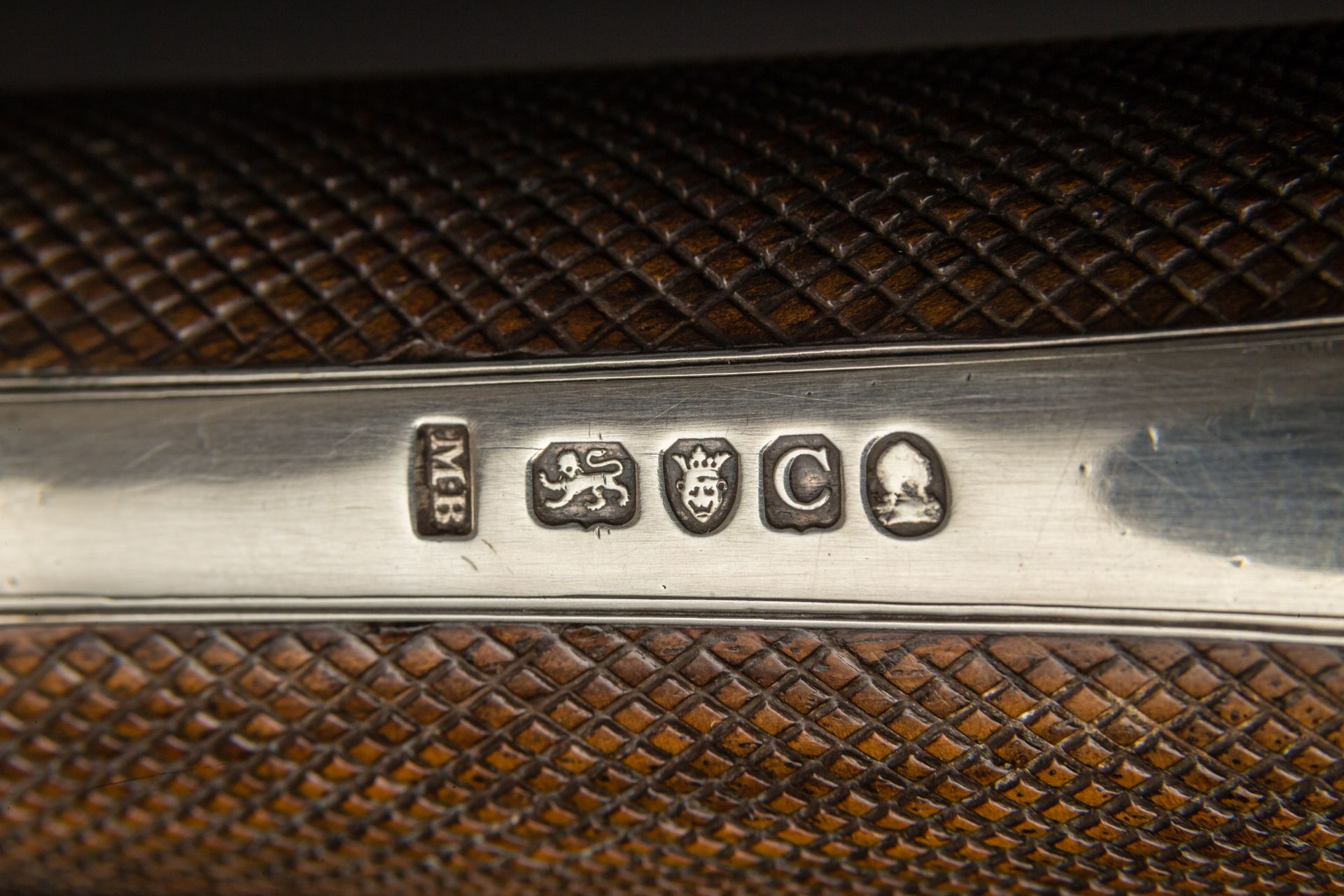
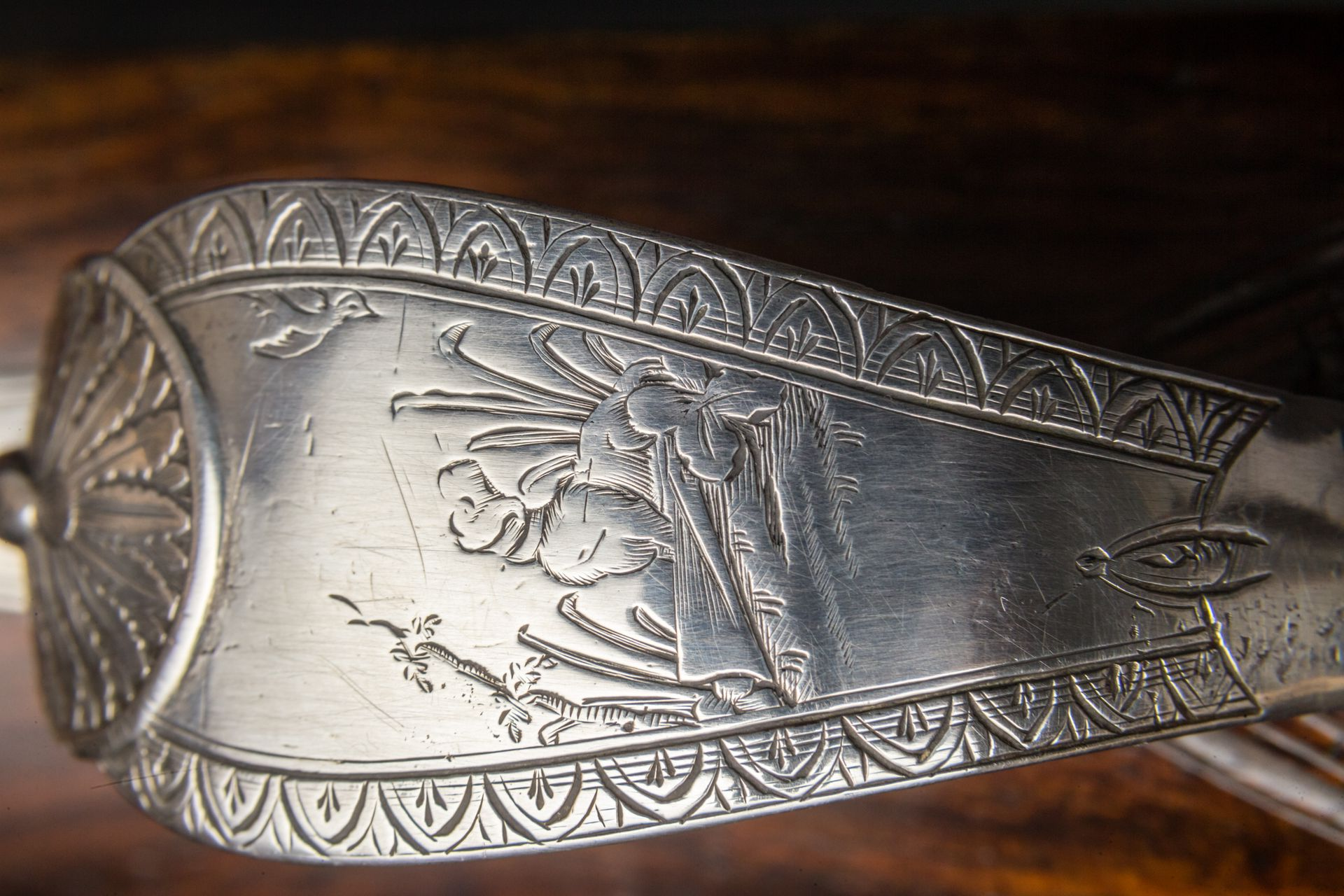
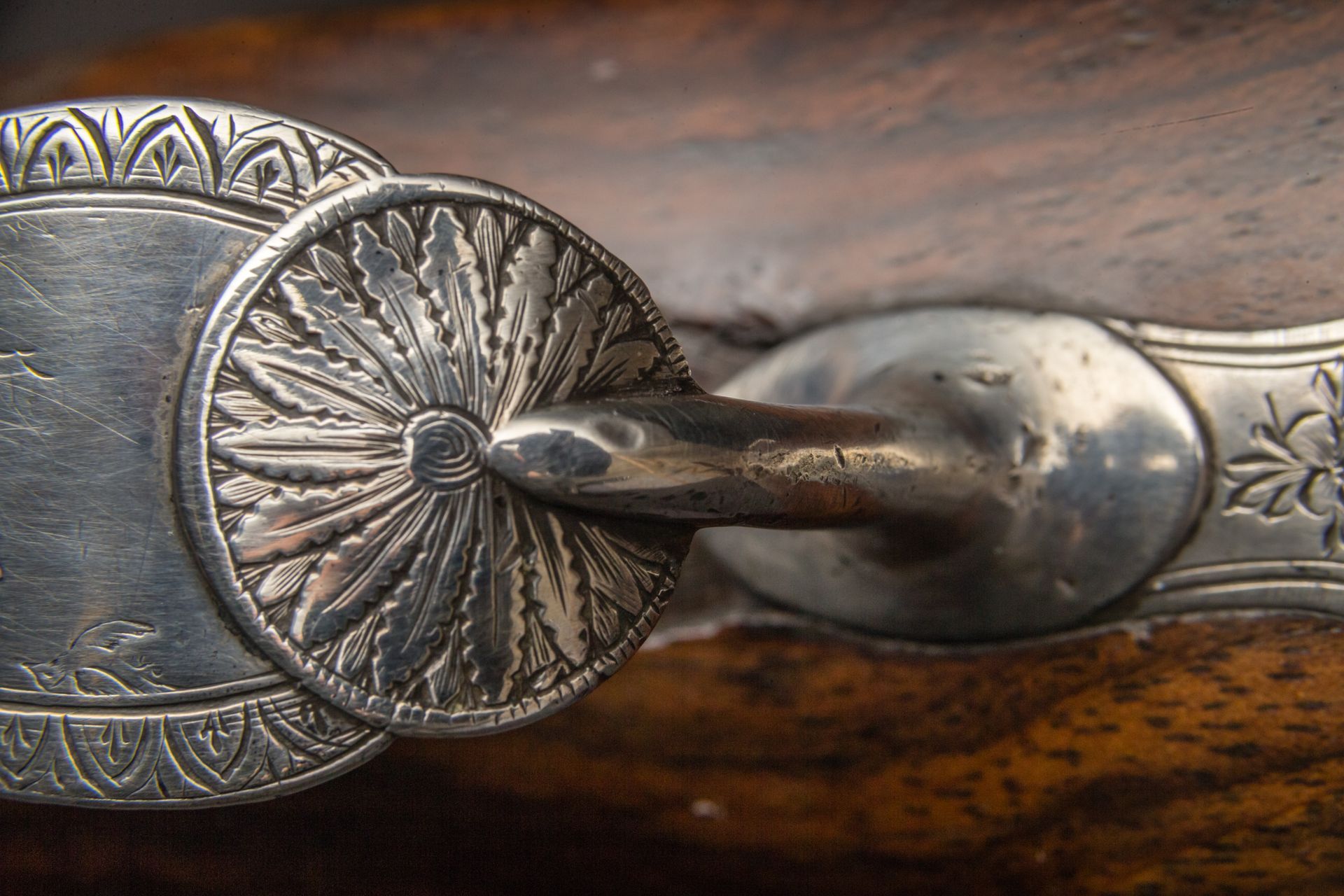
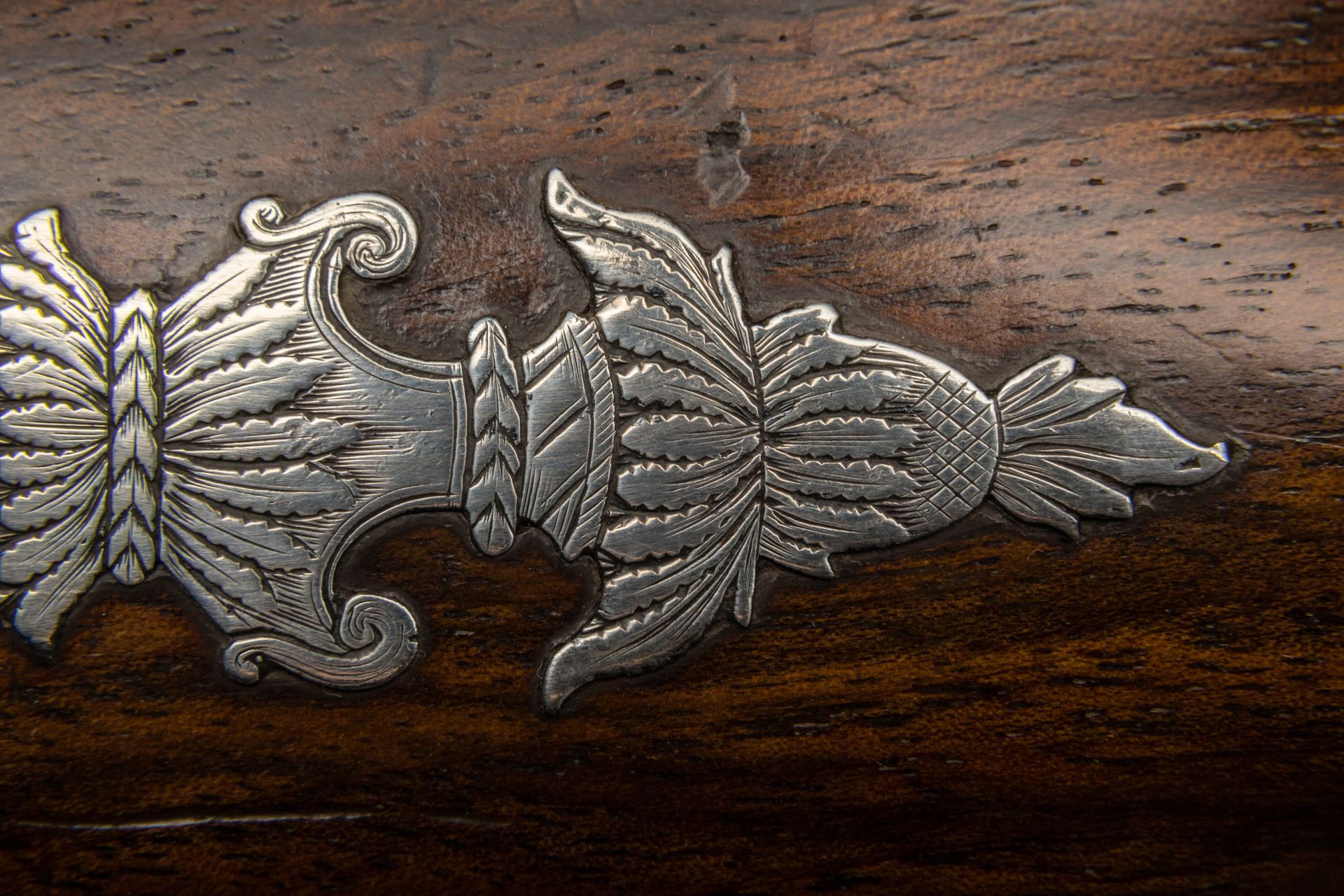
For many years his “MB” mark was credited to another silversmith, Moses Brent. In 1999 Bernard Dickens, writing in the Journal of the Arms and Armour Society, showed that it belonged to Barnett.
The partnership between the Brander and Barnett workshops was a long one. A pair of flintlock pistols by William Brander, made around 1782–83 and now in the Metropolitan Museum of Art in New York, is also mounted in Barnett’s silver. The Guildhall gun shows the same two workshops still working together some fifteen years later, by then under Martin Brander.
Barnett went on to serve as Master of the Founders’ Company in 1807, the same year Martin Brander served his second term as Master of the Gunmakers. The Barnett name also runs deep in the Gunmakers’ Company itself: between 1761 and 1943, eleven members of the Barnett family served as Master on thirty occasions, more than any other family to date.
A gun of its moment: 1798
The year on the silver, 1798, places the gun at a turning point in Martin Brander’s career. Britain was at war with Revolutionary France, and that same year Brander became a contractor to the Board of Ordnance, supplying arms to the Crown until 1820.
By then he had already been supplying the East India Company since 1791, a contract he held until 1826. Trading from 70 Minories, and later as Brander & Potts, his firm was first and foremost a maker of arms for the state and for trade.
That is what makes this gun notable. A silver-mounted sporting gun of this quality was not the everyday work of a military contractor. It shows that the Brander workshop could also produce fine sporting arms for private clients, at the very moment its government business was expanding.
From Purdey's collection to the Company
For many years the gun was held in the collection of James Purdey & Sons Ltd. The firm was founded in 1814, some sixteen years after the gun was made, and has become one of the best-known names in London gunmaking.
Liveryman Dr Nicholas Harlow identified the gun as a strong candidate for Guildhall and brokered the discussions with Purdey. David de M Williams, the Company’s Honorary Curator and an internationally recognised authority on antique firearms, valued the gun so that the Company paid a fair price.
The gun was then purchased and donated for exhibition at Guildhall by Past Master Richard Hefford-Hobbs FREng and Court Assistant Professor David Williams OBE FREng, on behalf of the Gunmakers’ Company. Their gift will return a gun made by two Masters of the Company to public view, in the heart of the City whose livery companies shaped the trade it came from.
Conservation by the King's Armourer
Ahead of its display, the gun has been conserved by gunmaker Simon Metcalf LVO, an Honorary Liveryman of the Company and lately King’s Armourer. His work brings the story full circle: a gun made by Masters of the Company, cared for by one of the finest craftsmen in the trade today.
The most remarkable part of his work is also the easiest to miss: he recovered the original case-hardening blue on the lock plate. A blued finish surviving from this period is rare. Many guns of the time lost theirs to over-cleaning in their own day, or to over-enthusiastic collectors since.
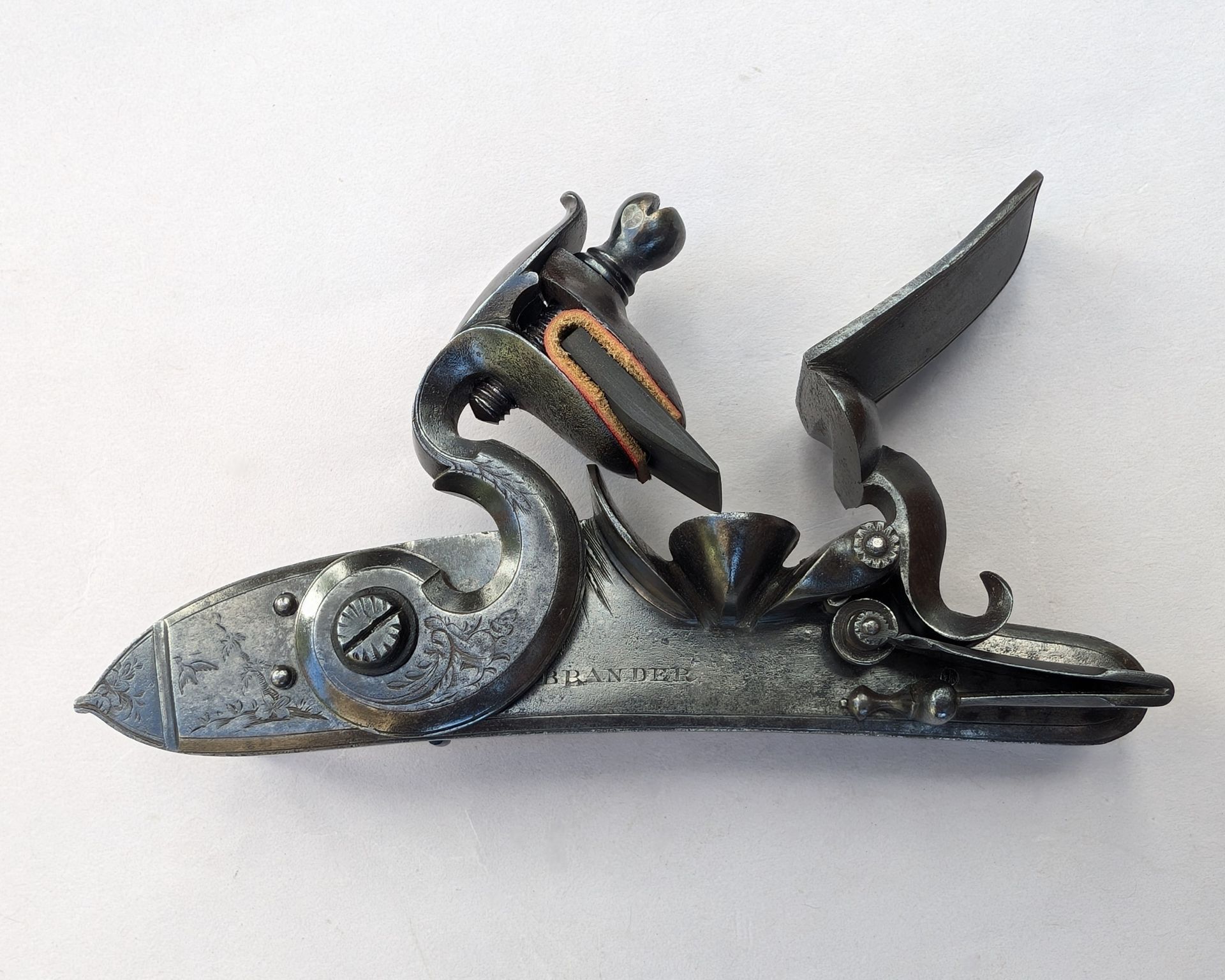
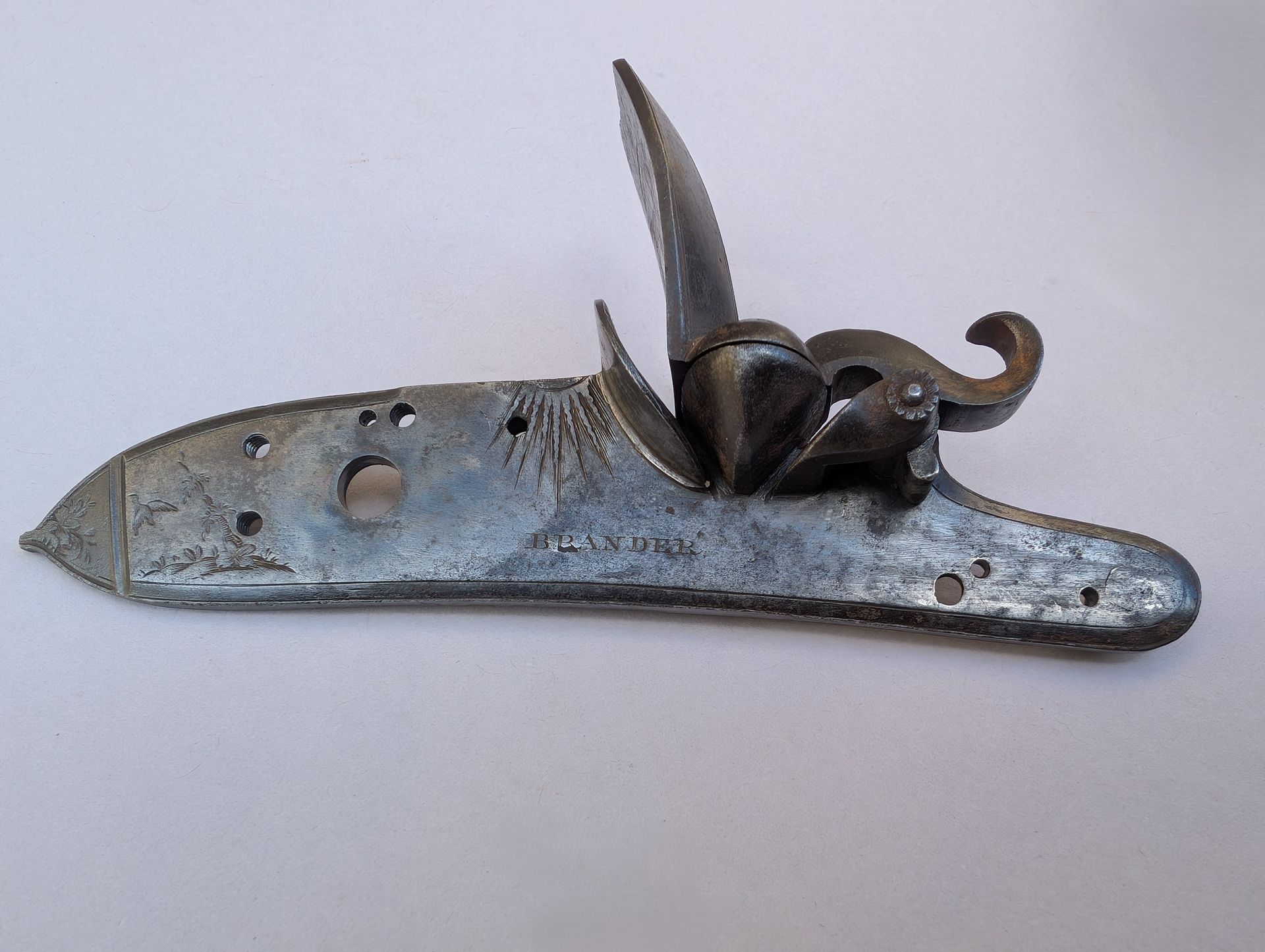
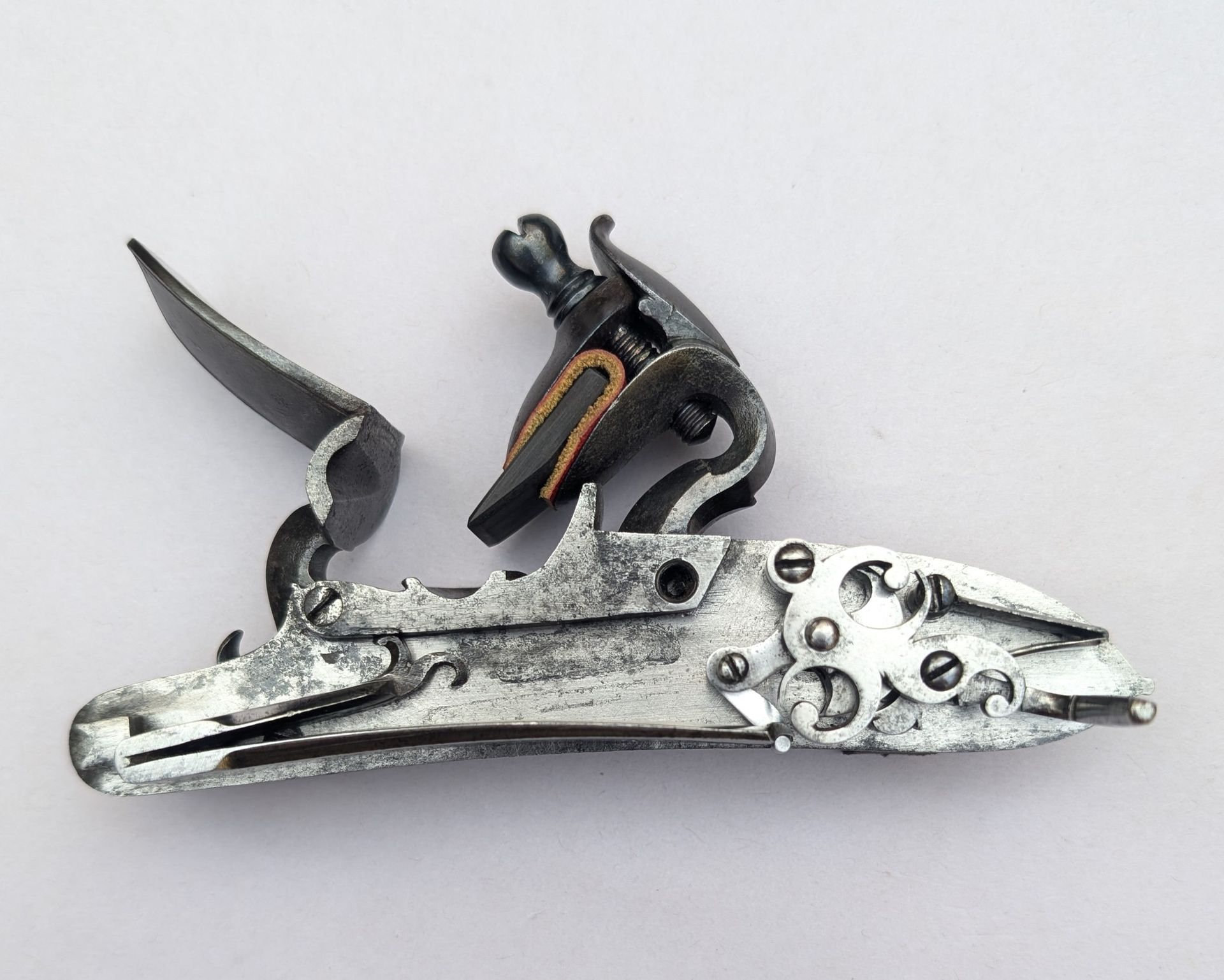
Views of the Brander gun during the conservation effort. Photographs: Simon Metcalf LVO.
“Part of the conservation process is the careful examination of surfaces before treatment, to understand and record evidence of original craft, technology and decoration.
Beneath surface grime and corrosion on parts of the lock, the original case-hardening colours had survived. Identifying them early informed the choice of solvent and mechanical cleaning methods, preserving colours that might otherwise have been polished away.”
— Simon Metcalf LVO, lately King’s Armourer
He also replaced the gun’s missing top jaw and its screw. On a flintlock, the flint is gripped between two jaws at the head of the cock, and the screw clamps them tight. Because the jaw is loosened every time the flint is changed, it is one of the parts most often lost from guns of this age. With it restored, the lock is once again complete, as Martin Brander would have known it.
The road to Guildhall
The gun’s journey is not yet complete, and it will be some time before it goes on display. Laura Miller is working with colleagues to decide where best to place it within the suite of rooms at Guildhall used for Freedom ceremonies, including the Chamberlain’s Court. That decision will shape the design of its display case, and other Liverymen are expected to join in meeting the cost.
A place at Guildhall
The Gunmakers’ Company has served the gun trade since its Royal Charter of 1637. This gun captures that service across more than two centuries in one object.
It was made by a father-and-son dynasty of Masters, proved by the Company, mounted by a silversmith who led his own livery company, and kept by one of London’s great gunmakers. It has now been found, valued, given and conserved by members of the Company today. Each of them, in their own century, added something to it.
Its place at Guildhall, among the rooms where new Freemen take their Freedom of the City, is a fitting one. Many who see it will be taking that step themselves, as members of the Gunmakers’ and other livery companies. The gun is a reminder that London’s livery traditions are not only ceremonial. They are carried in the skill of the people who make, mount, collect and conserve fine things, and who pass that skill on.
With thanks
The Company is grateful to Liveryman Dr Nicholas Harlow, who identified the gun and brokered its purchase from Purdey; to David de M Williams, Honorary Curator, for his valuation; to Past Master Richard Hefford-Hobbs FREng and Court Assistant Professor David Williams OBE FREng for their generous gift; to Honourary Liveryman Simon Metcalf LVO for his conservation of the gun; to Laura Miller and her colleagues for their work on its display; and to Mark Hewlett of Gallyon for the studio photographs.