Leading Gunmaking into its Next Chapter
Our Lady Master Interviewed by Gun Trade Insider Magazine on Preparing British Gunmaking for its Next 400 Years
You became Master of the Worshipful Company of Gunmakers in November 2025. What did taking on the role mean to you personally, and what priorities did you set for your year in office?
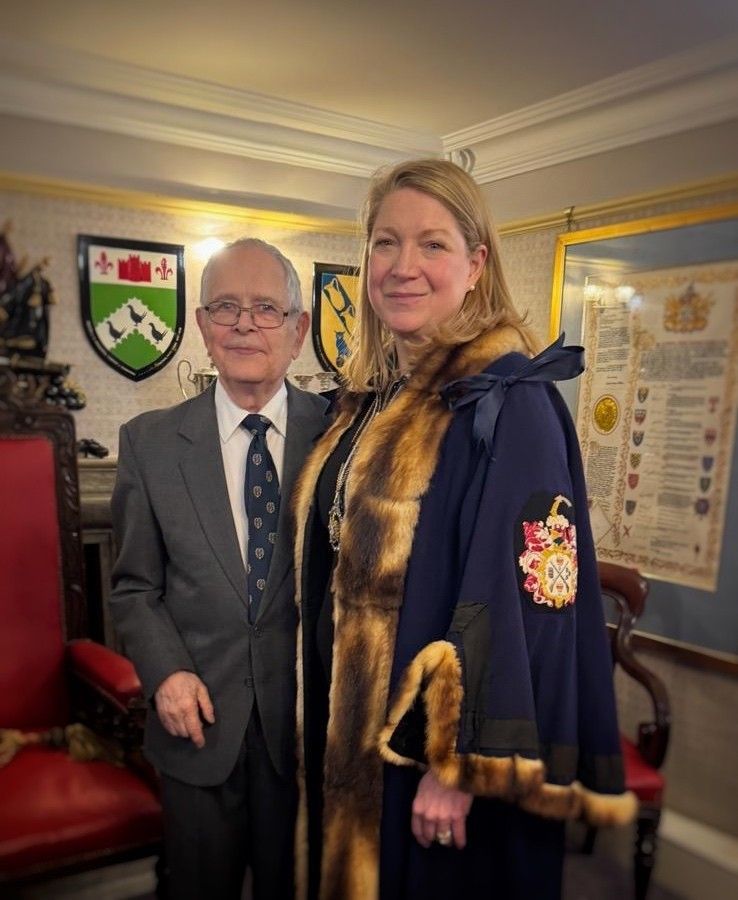
Personally, it was a moment I’m still processing — a girl from Georgia, taking on a role in an organisation chartered in 1637. I’m the second Lady Master and the second American Master of this Company, and I hope that’s the start of a bit of a tradition.
For the trade, what matters more than my own story is what I set out to do. Three priorities: strengthen the Proof House’s capacity to cope with the volume and complexity of what’s coming through the door — innovation is constantly happening, which is exciting; back the apprentices and the Certification Panel properly, because that pipeline is the trade’s future workforce; and begin serious preparation for the Gunmakers’ 400th Anniversary (Gunmakers 400) in 2037, which sets the course for the future.
The Master oversees the Company’s activities and committees while representing the Gunmakers at events across the City of London. What have been the most memorable moments of your year so far?
For one year, I am privileged to act as the Company’s ambassador in the City. I have endeavoured to raise the profile of the Gunmakers in the Civic City whenever given the chance — to be honest, we have been a bit of a mystery in the City — and I have explained the work of the Proof House and its importance to the safety of our armed forces, police and private gun owners whenever possible.
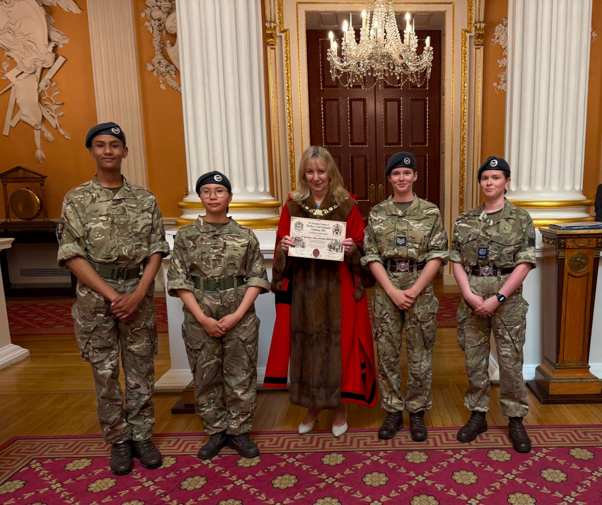
However, my most memorable — and favourite — part of my role, without question, is presenting certificates as part of the Certification Panel Awards Ceremonies, including presenting them to our apprentice. The panel considers working gunmakers and apprentices whose bench skills have been formally examined and recognised — which is a genuine assessment of competence.
We are very much looking forward to handing out the first certificate to an apprentice gunmaker in the newly created Lady Mayor’s Livery Apprentice Awards in September.
Our 389th anniversary this past March also stays with me — standing in the Proof House amongst colleagues, conscious that guns have been proofed on that site since 1675 and are still being proofed there today, under the same statutory authority. For a trade that sometimes gets reduced to heritage marketing, that continuity is the real thing.
The Company has maintained a close relationship with the City of London for centuries. Why is preserving traditions such as hosting the Lord Mayor at the Proof House still important today?
We are one of two livery companies still operating under their original charters. The Worshipful Company of Goldsmiths is the other — they assay gold and silver and we proof guns. The Lord Mayor — Lady Mayor this year — and the Sheriffs visit us each year and gain a better understanding of the work that we do as a ‘working company’, and have been doing since 1637. The City is very supportive of apprentices and is always keen to hear about the work of the Gunmakers Trust in supporting those starting their careers on the bench.
For the trade, that visibility matters commercially as well as symbolically. It keeps proof — and, by extension, the whole framework of standards the trade operates under — visible to people who influence policy and public perception well beyond the shooting world. That’s not a small thing when licensing and import rules are under constant scrutiny.
The Proof House Committee forms an important part of the Company’s governance and performs a critical role for the gun trade. What have you learnt about its work during your time as Master?
The Committee has to hold two things in tension at once: absolute rigidity on the test itself, and constant adaptation around it. The pressures, the methods, the legal framework going back to the 1868, 1950 and 1978 Proof Acts — none of that bends. But the inputs keep changing: new technologies, deactivated firearms, evolving ammunition. The Committee keeps proof technically current without ever compromising what proof actually certifies.
What has struck me most is that this isn’t abstract governance — it’s operational, day in, day out. The trade relies on the Committee getting that balance right, because Safety, Integrity, Proof isn’t a motto on a wall; it’s what makes a London Proof House proof mark mean something to a buyer anywhere in the world.
The Certification Panel recognises the skills of apprentices and experienced gunmakers. Why is formal certification important for maintaining standards and protecting the future of British gunmaking?
A gunmaker’s name might mean everything to people who already know the trade and absolutely nothing to a customer, a foreign retailer, or an AI-driven search result trying to work out who is excellent at what they do. Certification gives the trade a portable, verifiable recognition that doesn’t depend on word of mouth. It also gives former apprentices who have become certified a mark of achievement recognised by employers.
Additionally, it protects the trade from within. As buyers increasingly form their first impressions through search engines and AI rather than personal recommendation, an industry that can point to a genuine, independently assessed standard has a defensible story — one that is not vulnerable to being flattened into a few specifications and a price.
Through the Gunmakers’ Trust, bursaries are provided to help gunmaking businesses employ and train apprentices. What more can the industry do to encourage young people to consider careers in gunmaking and related trades?
Show the bench, not just the finished gun. Most young people don’t discover a trade through an advertisement — they discover it by seeing someone skilled doing something interesting and wanting to do it as well. Gunmaking businesses need to be far more visible about the actual work: name the craftsmen, film the process, explain the repair, put apprentices in front of the camera as often as finished guns. Show the achievement and satisfaction of creating something beautiful that is made to last a hundred years or more.
It also means businesses treating an apprentice as a genuine investment — with bursary support from the Gunmakers Trust making that easier where possible. The trade needs to engage directly with schools and careers advisers, because most young people never hear “gunmaker” mentioned as a career option at all. Working gunmakers are an ageing group — we will need up to 50 trained apprentices in the next few years — so getting young people engaged is critical to the survival of those skills.
The Gunmakers must balance centuries of tradition with the needs of a modern and changing industry. How is the Company evolving while preserving the heritage and standards for which it is known?
The 1637 Charter never anticipated modern gunmaking or today’s tariff and licensing environment — but the underlying duty, ensuring firearms are safe, hasn’t shifted an inch in nearly four hundred years.
In practice, the Proof House continually updates its technical methods to keep pace with modern ballistics and changing technology. The Certification Panel gives formal structure to skills that used to rest purely on reputation. We’re building towards Gunmakers 400 as a forward-looking milestone, not a retrospective one.
With several months of your term remaining, what would you still like to accomplish, and what message would you like to give to members of the UK gun trade?
I would like to see tangible progress towards Gunmakers 400 — groundwork undertaken now that makes 2037 a genuine statement about where British gunmaking stands: at the pinnacle of world gunmaking.
I’d like the Proof House’s capacity further strengthened, more apprentices identified and coming through. I’d like to see our ability to support apprentices continue along a positive path with the Trust’s support, and the Certification Panel’s standard and importance recognised even more widely across the trade and with customers globally.