Conservation
of our Charter
and Ordinances
Conservation, restoration, and digitisation of the Gunmakers’ Company Charter and Ordinances, documenting the work undertaken by the London Archive to preserve these historic governing documents for future study and display.
By David Williams OBE FREng and Nicholas Harlow Hon. Archivist
As we announced on the Company’s website during the Summer, the Heritage and Collections Committee had been directed by the Master to look into the conservation and preservation of our Charter and Ordinances. As the work is now nearing completion, the Master led a visit of a group of Liverymen to the Conservation Studio of the London Archive on the 14th October 2025 to view their progress.
We were welcomed to the Studio by Miles Myers, Conservation Manager, and Tim Warrender, a senior conservator. Howard Doble, Senior Archivist, also joined us.
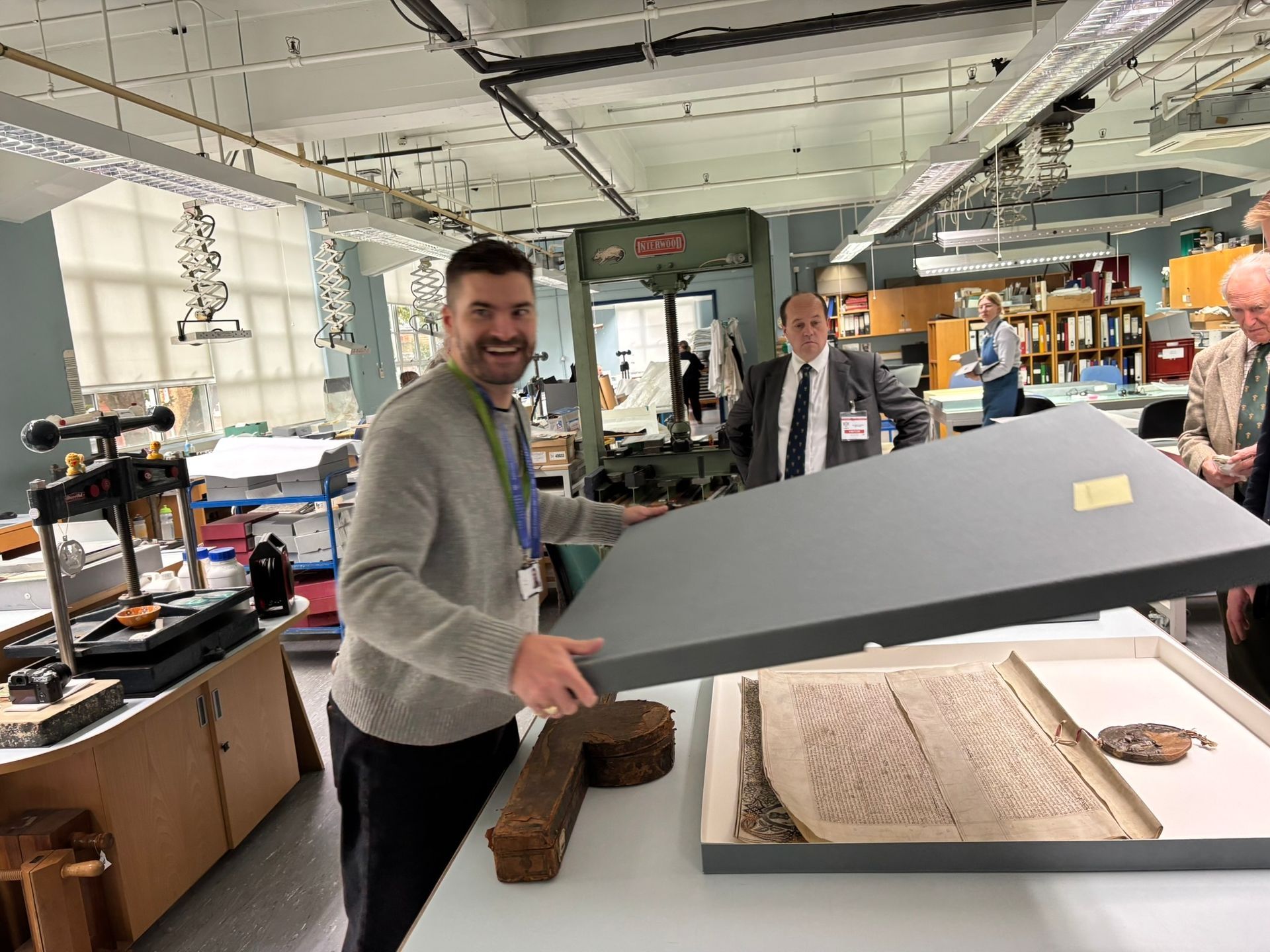
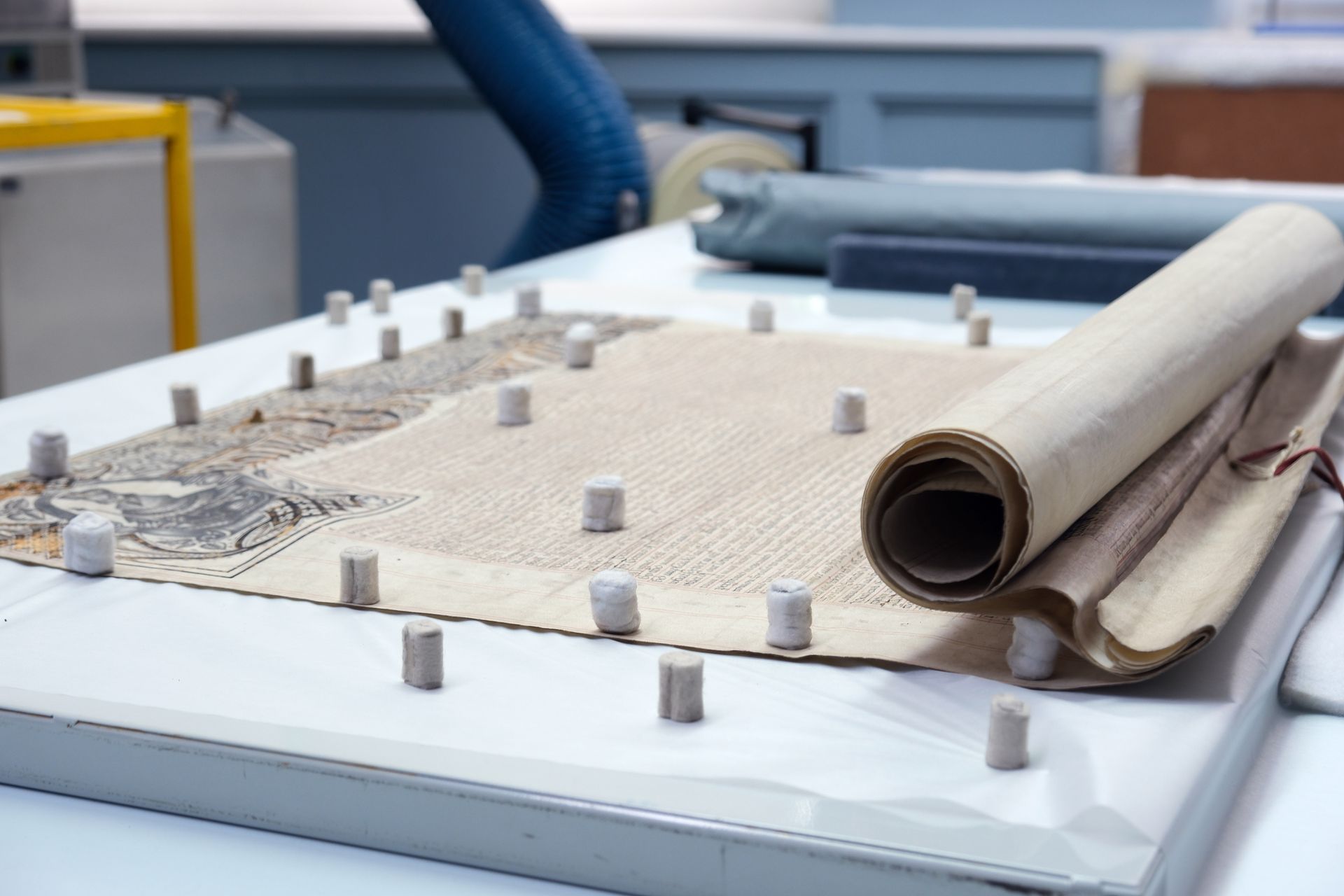
Miles gathered us around the large table at the centre of the spacious studio. He then, in an ‘un-boxing’, removed the lids of the two storage boxes on the table to reveal the Charter and Ordinances. These had been taken from their original boxes, where they had been tightly rolled, and gently flattened, cleaned and conserved. Tim walked us through the processes that had been used for this, explaining that there had been a need for a small repair to the Charter’s decorated initial. He also emphasised the value of transferring the documents to the micro-environment of a purpose-built conservation box. The Studio are preparing a video of the steps in the work so that the details can be shared with the Company.
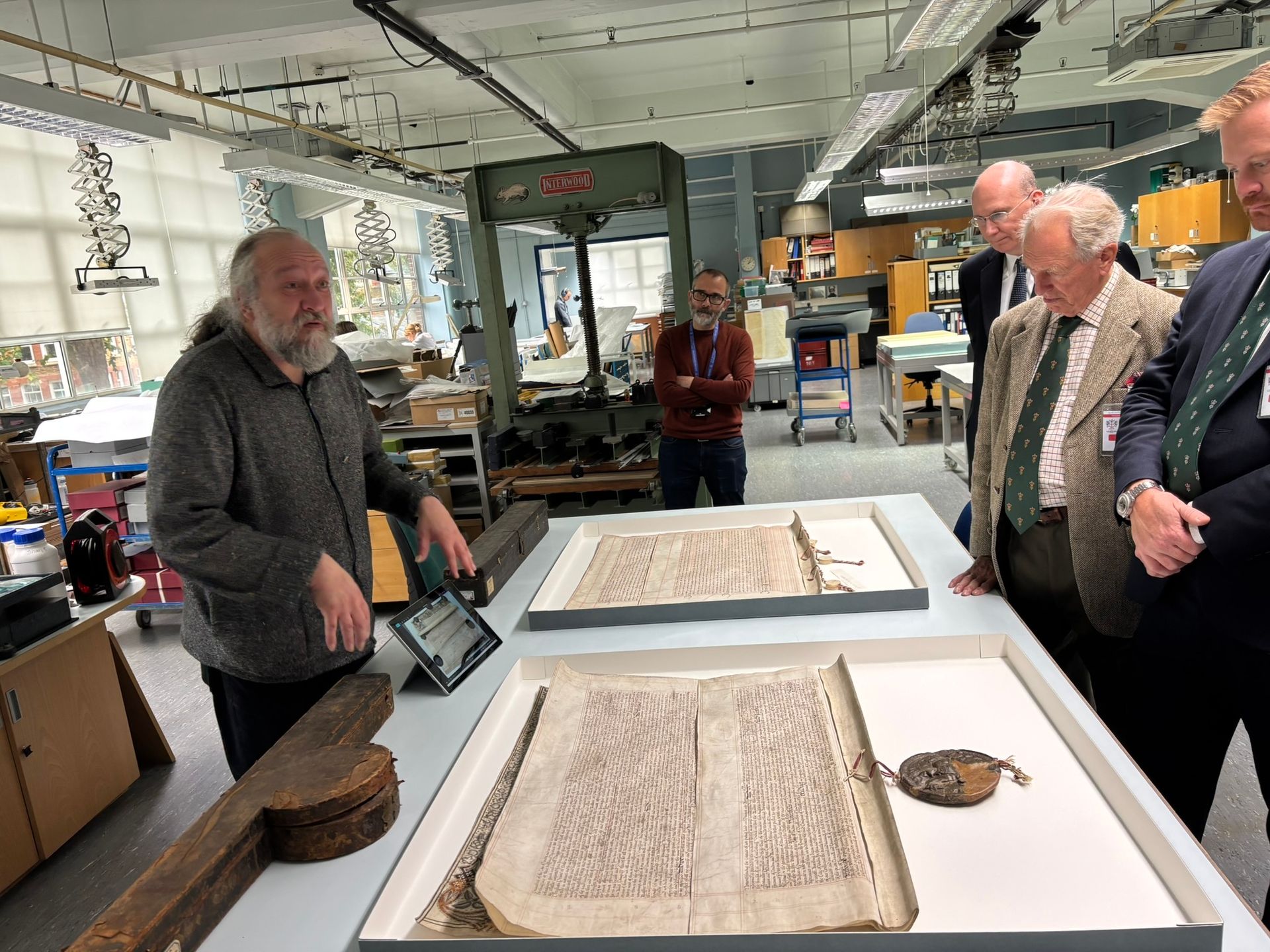
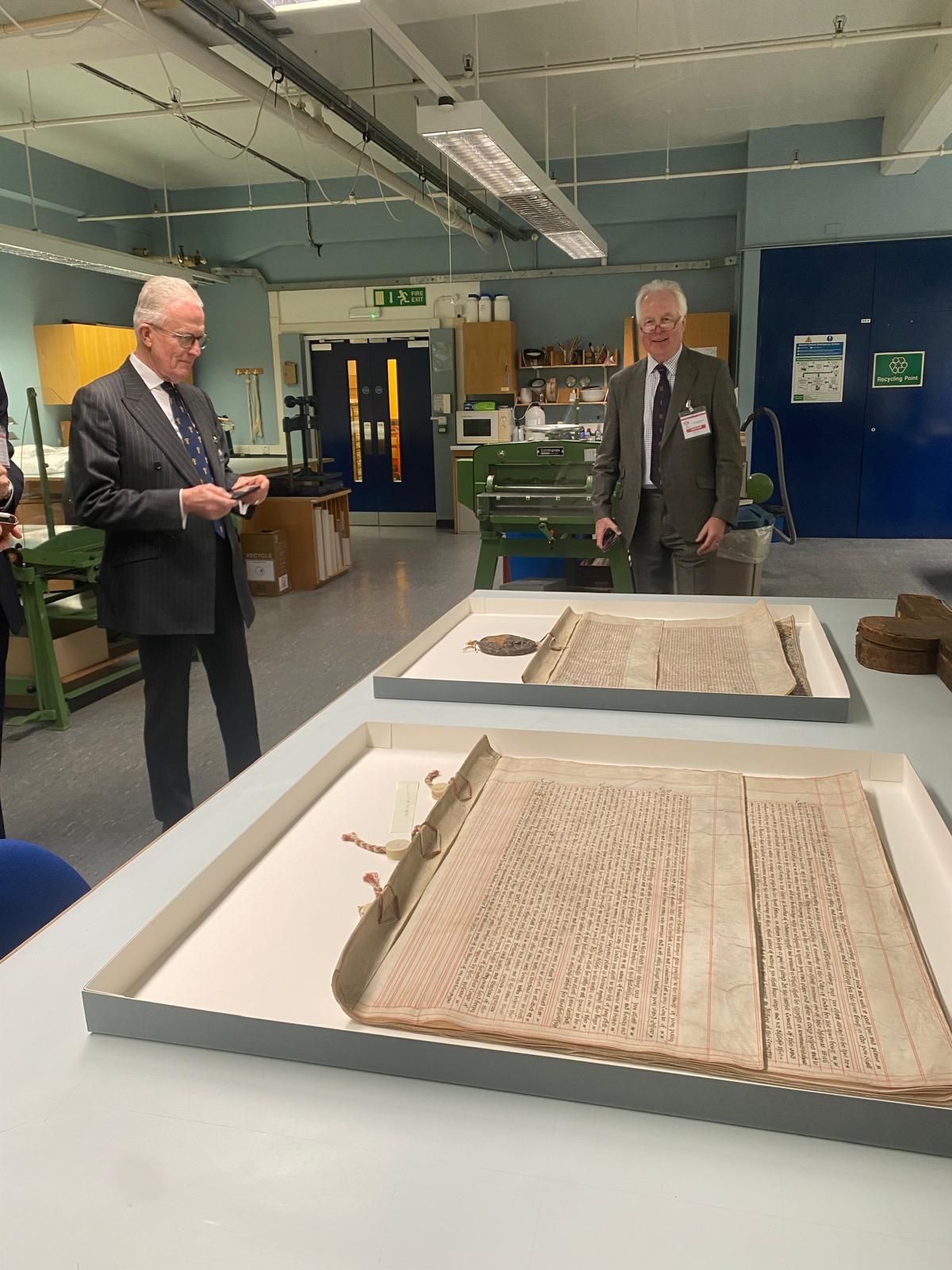
The visitors, in the meantime, had been slowly digesting what they were looking at – the two key governing documents of the Company: the Charter dating from 1637, naming our first Master Henry Rowland and the other founding freeman gunmakers; and the Ordinances from 1670 describing our day-to-day operation. When this had sunk in and we understood that both were approaching 400 years old, we started to look a little more closely both at the documents themselves and their original containers.
A few things caught our attention: The repair to the initial of the Charter was almost invisible, other than being revealed by the thin slivers of Japanese handmade paper on the back of the document. A centimetre diameter hole to one sheet was caused by an insect bite to the animal that provided the skin, and had grown as it was stretched as part of the preparation process. The Ordinances box is lined with the pages of an astronomy book written in Latin. The three seals on the Ordinances are protected by beautiful and precisely turned threaded ivory boxes.
Some of us noted that the splendid gilt-brass escutcheon of the original Charter box was dated 1690. A closer look showed that it is engraved ‘RS’. Given that Robert (1) Silke Senior would have been Master that year, we can speculate that the box was presented by him. He was also Chief Gunmaker, Tower of London, at the time. The Silkes are one of the dynastic families that have formed the backbone of the Company, and were crucial in our early years. Liveryman Howard Blackmore’s work[i] tells us the John (3) was the first Silke to be Master in 1655, the same year that we began to accept apprentices. Robert’s father John (4) was Master in 1660, and was also one of the Gunmakers churlishly arrested by the Blacksmiths Company in 1656.
Following our visit the Digital Studio have taken high resolution, archival quality digital photographs of each page of the documents, the four of the Charter and the eight of the Ordinances. The Conservation Studio have also boxed the seals. The final step is to professionally scan and make 3D printed replicas of the Charter seal. The latter is a first for the London Archive, so, with them, the Gunmakers are leading the field. When this work is complete, hopefully in the early new year, an aim is to hang a replica of the first page of the Charter and its seal in the Court Room.
Myles and Tim have also generously offered to bring the Charter and Ordinances to our next Company Charter Lunch and explain the work that had been done to Liverymen and their guests. They will certainly be invited to come and see what we do at the Proof House.
This work has been funded by the generosity of Court members. As well as being fit for the future and secured by a preventative conservation approach, the documents will now be more easily accessible for study. This includes us as a Company, as we seek to confirm the exact details contained within each document and understand how they may influence our actions and operations in the future.
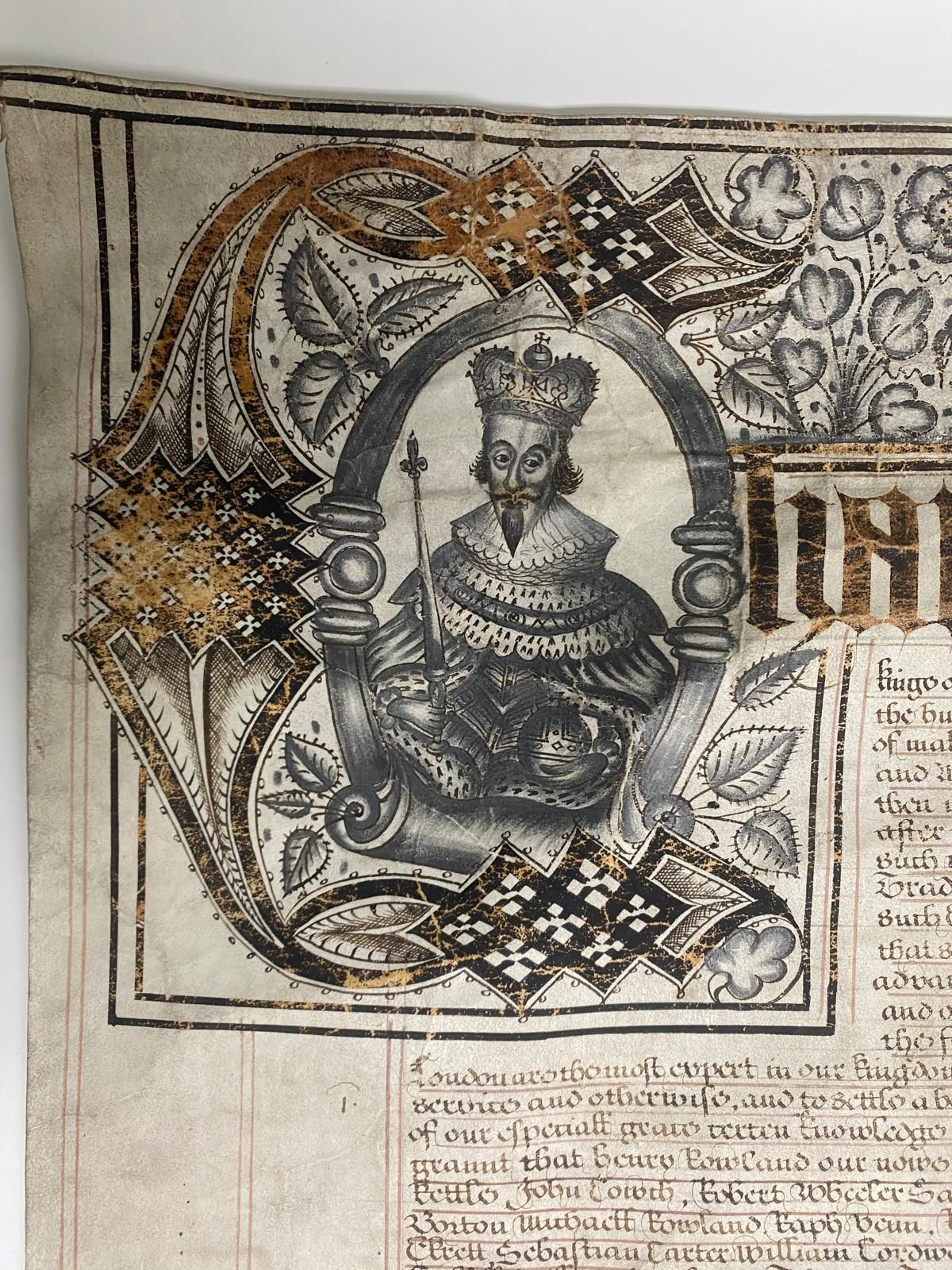
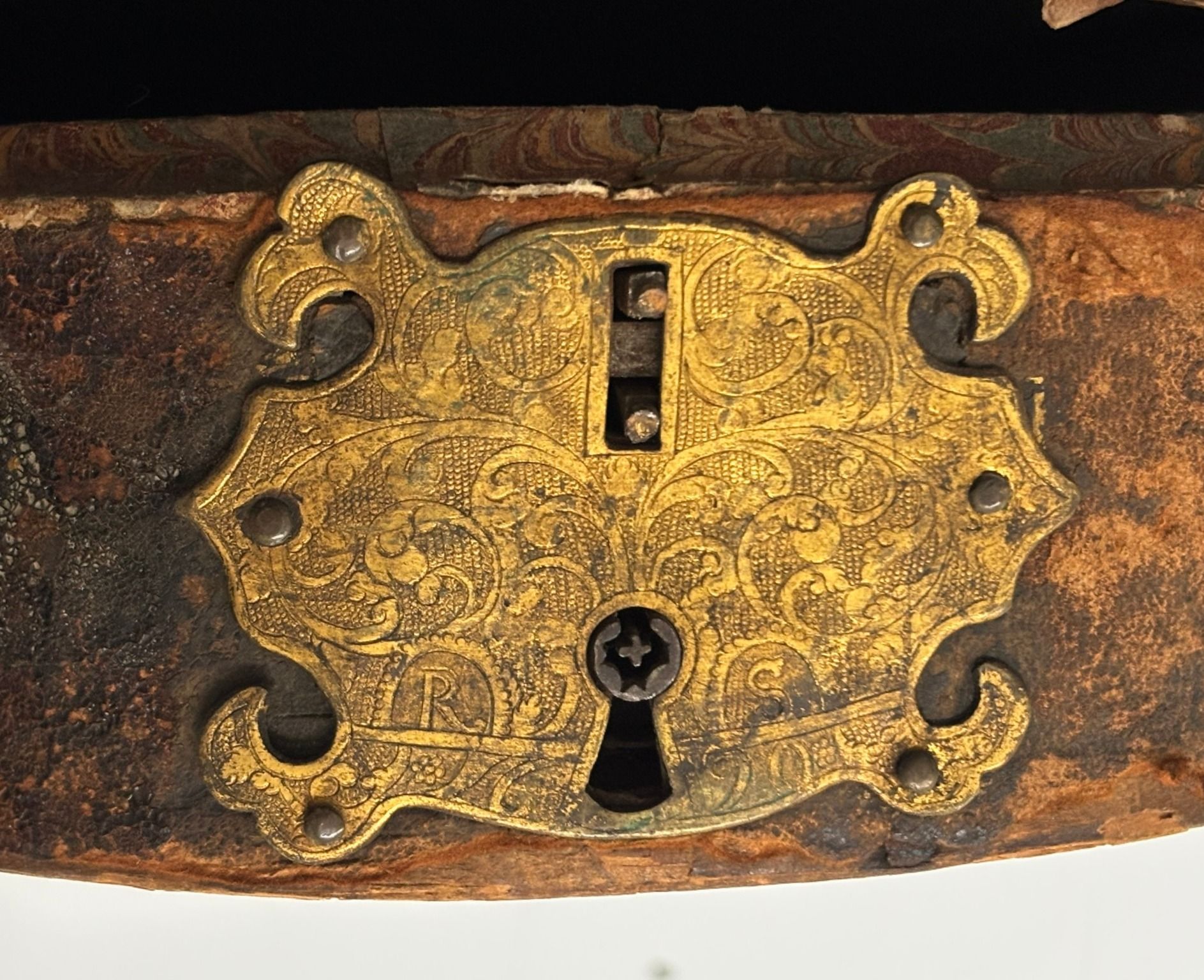
Image Caption
1. Myles Mears reveals our charter
2. Tim Warrender explains the conservation process
3. The flattening process
4. A relieved Clerk and Heritage and Collections Committee Chair
5. The conserved initial of the Charter
6. The escutcheon on the Charter Box with RS and 1690
*H. L. Blackmore, A Dictionary of London Gunmakers, 1350-1850, Phaidon Christies, 1986 and Supplement, Museum Restoration Service, 1999. The latter is the best source for the early history of the Company.